Southern Africa’s adventure scene is built around a handful of genuinely world-class experiences: the longest commercial abseil on Earth, one of the world’s great waterfalls rigged out for bungee jumping and white water rafting, a canyon second only to the Grand Canyon in scale, and granite climbing that draws alpinists from around the world. This guide covers the region’s marquee adventure activities, what each one actually involves, and how to plan a trip around them.
At a Glance: Five Marquee Adventures
- Maletsunyane Falls, Lesotho: the world’s longest commercial abseil, a certification held since 2005.
- Victoria Falls, Zambia–Zimbabwe: a 111m bungee jump off the historic bridge, white water rafting and (when open) Devil’s Pool.
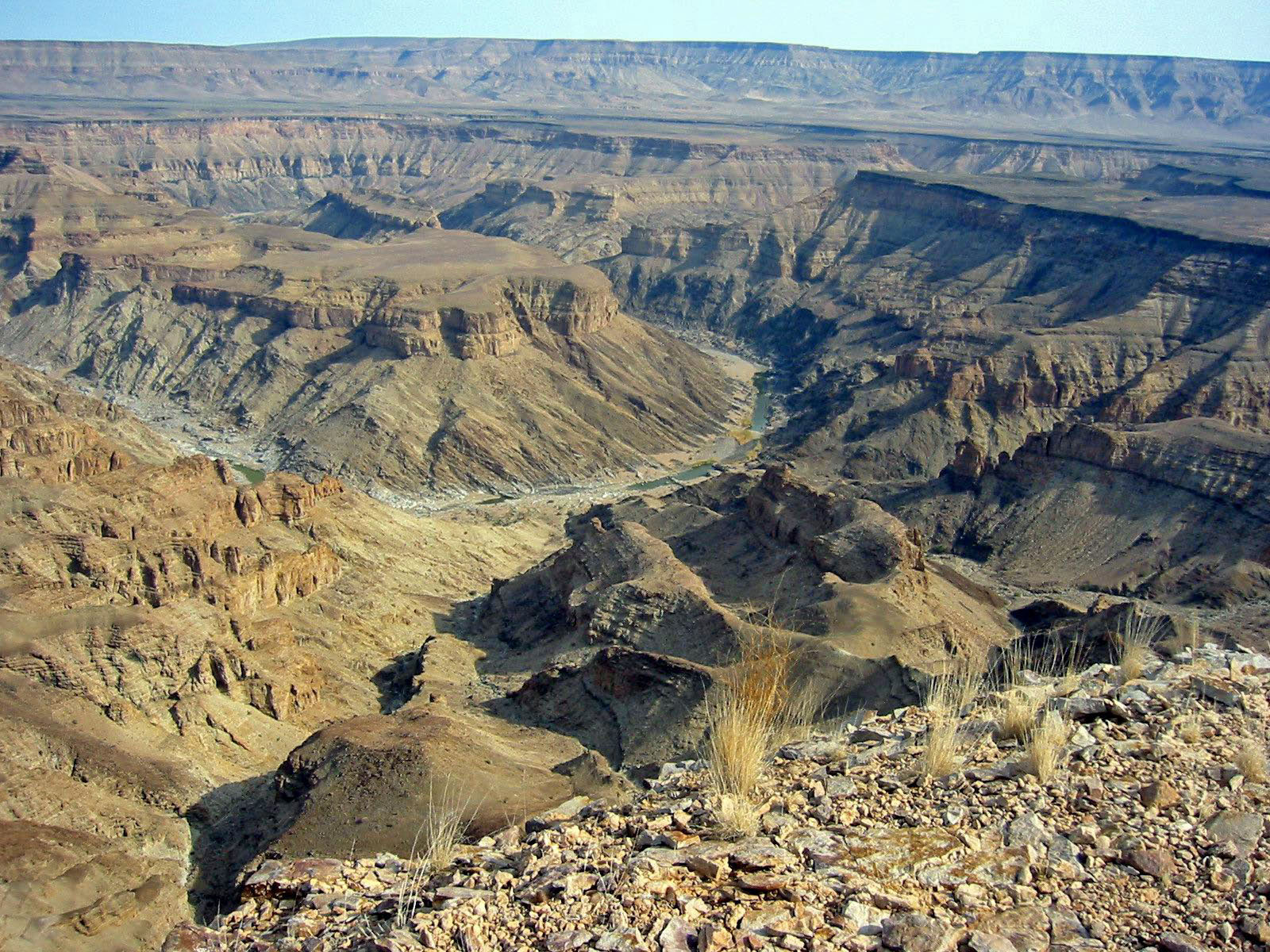
- Fish River Canyon, Namibia: the world’s second-largest canyon; an 85km, four-to-five-day hike open only 1 May–15 September.
- Spitzkoppe, Namibia: around 100 granite climbing routes, from bouldering to 14-pitch traditional and sport climbs; climbing season April–September.
- Sani Pass, Lesotho border: a switchback 4×4 adventure drive to one of Southern Africa’s highest road passes.
Maletsunyane Falls: the world’s longest commercial abseil
Near the town of Semonkong in the Lesotho highlands, Maletsunyane Falls drops 192 metres, but the abseil run alongside it goes further still. Operated by Semonkong Lodge, the descent measures 204 metres and holds the Guinness World Record for the longest commercially operated abseil, a certification held since 2005 (Semonkong Lodge, Wikipedia). The rappel starts above the waterfall’s source and ends on a rock ledge at the base of the gorge, meaning the drop is longer than the falls themselves. It’s a full-day commitment best combined with a night at Semonkong Lodge, and pairs naturally with a highlands road trip that also takes in Lesotho’s mountain passes.
Victoria Falls: bungee, white water rafting and Devil’s Pool
Victoria Falls, straddling the Zambia–Zimbabwe border, is the region’s single biggest concentration of adventure activities in one place.
Bungee jumping
The bungee jump off the historic Victoria Falls Bridge is a 111m drop toward the Zambezi River below, one of the most iconic bungee jumps in the world for its setting alone (Victoria Falls Guide). The same bridge complex also offers a bridge swing — an 80m freefall into Batoka Gorge — and a zip line strung across the gorge.
White water rafting
Below the falls, the Zambezi River delivers some of the best Grade 4 and 5 white water rafting in the world, through named rapids including “The Overland Truck-eater,” “The Mother,” “Gnashing Jaws of Death” and the final Grade 5 rapid, “Oblivion” (Visit Victoria Falls). It’s a serious commitment for a full day and not for first-time rafters looking for something gentle.
Devil’s Pool
On the Zambian side, Devil’s Pool is a natural rock pool right on the lip of the falls, reached via Livingstone Island, where a submerged rock wall lets swimmers get startlingly close to the edge without being swept over. It’s only accessible when the Zambezi’s flow is at a safe level, typically from September through December (Visit Victoria Falls). Outside that window the pool is closed for safety, so it’s worth checking current access before building a trip around it specifically.
Fish River Canyon: multi-day desert hiking
In southern Namibia, Fish River Canyon is the second-largest canyon in the world after the Grand Canyon, reaching depths of up to 550 metres (NWR Namibia, Wikipedia). The classic hike runs 85km over four to five days along the canyon floor and is only open between 1 May and 15 September, when temperatures are manageable — outside this window, daytime highs can reach 48°C, and flooding closes the route entirely. Permits must be arranged in advance through Namibia Wildlife Resorts, with only around 900 issued per season (NWR Namibia), so this is a trip that needs planning months ahead rather than a spontaneous add-on. It’s a serious backcountry hike with no facilities along the route, not a casual day walk.
Spitzkoppe: granite climbing and bouldering
Spitzkoppe rises out of the Namib Desert as a cluster of granite peaks formed by intrusions roughly 120–135 million years ago, with millennia of erosion stripping away the softer surrounding rock to leave the dramatic domes seen today (AAC Publications, Grokipedia). It’s regarded as one of Southern Africa’s finest climbing destinations, with around 100 routes ranging from bouldering problems to 14-pitch traditional and sport climbs, and delicate face and crack climbing on the southwest wall’s big slab routes opened from the late 1980s onward. The summit was first reached in 1946. Given the desert heat, climbing is only recommended between April and September — outside that window the rock gets too hot to handle safely (Namibia Experience).
Sani Pass: adventure driving on the Lesotho border
Sani Pass is the region’s best-known adventure driving route, climbing a steep, switchback dirt track from KwaZulu-Natal up into the Lesotho highlands to the Sani Top border post, one of the highest road passes in Southern Africa. It requires a genuine 4×4 with low-range gearing — the gradient and hairpin bends rule out two-wheel-drive vehicles — and is often combined with a highlands stay near Semonkong, making it a natural link between a Sani Pass adventure and the Maletsunyane Falls abseil further into Lesotho.
Planning your Southern Africa adventure trip
These five activities sit across four countries, so a realistic itinerary usually picks a cluster rather than attempting all of them in one trip. Victoria Falls alone is worth two to three days given the density of activities on both the Zambian and Zimbabwean sides. Lesotho’s Maletsunyane abseil and Sani Pass pair naturally into a single highlands loop. Namibia’s Fish River Canyon and Spitzkoppe both fall in the April-to-September dry season window, making them easy to combine on one Namibia road trip, though the canyon hike specifically needs permits booked well in advance. Across all of these, the common thread is seasonality: nearly every marquee adventure activity in the region has a safe-access window driven by water levels, heat or flooding, so it’s worth building an itinerary around those constraints first and everything else second.
Frequently asked questions
What makes the Maletsunyane Falls abseil the world’s longest?
Semonkong Lodge has held the certification for the world’s longest commercially operated abseil since 2005. The rappel starts above the waterfall’s source and ends on a rock ledge at the base of the gorge, so the drop is actually longer than the falls themselves.
How high is the Victoria Falls bungee jump?
The bungee jump off the historic Victoria Falls Bridge is a 111m drop toward the Zambezi River below — one of the highest commercial bungee jumps in the world, and the centrepiece of the region’s single biggest concentration of adventure activities in one place.
Is Devil’s Pool always open at Victoria Falls?
Not always — access depends on water levels and safety conditions, and the pool is sometimes closed. It’s worth checking current access before building a trip around it specifically.
How long does it take to hike Fish River Canyon?
The classic route runs 85km over four to five days along the canyon floor. It’s only open between 1 May and 15 September, when temperatures are manageable — outside this window, daytime highs can reach 48°C and flooding can close the route entirely.
Do I need a permit to hike Fish River Canyon?
Yes. Permits must be arranged in advance through Namibia Wildlife Resorts, and only around 900 are issued per season, so booking ahead is essential if you want to hike during the open window.
When is the best time to climb at Spitzkoppe?
Climbing is only recommended between April and September. Outside that window, the desert heat makes the granite too hot to handle safely. The site has around 100 routes, from bouldering problems to 14-pitch traditional and sport climbs.
What kind of vehicle do I need for Sani Pass?
A genuine 4×4 with low-range gearing. The gradient and hairpin bends on the switchback dirt track climbing from KwaZulu-Natal into the Lesotho highlands rule out two-wheel-drive vehicles entirely.
Can I combine several of these adventures in one trip?
Yes, though these five activities sit across four countries, so a realistic itinerary usually picks a cluster rather than attempting all of them at once. Sani Pass and the Maletsunyane abseil pair naturally, for example, and Victoria Falls alone is worth two to three days given the density of activities on both the Zambian and Zimbabwean sides.
About the author
Makume Toti is a digital marketing veteran with 15+ years of cross-vertical experience and a 12-year foundational career in the airline industry. He leverages his extensive insider knowledge of travel and enterprise SEM & AIO expertise to curate authoritative guides to Southern Africa for ExploreMzansi.