Southern Africa’s history is written into its landscape as much as its museums — mountain fortresses that founded nations, stone cities that ran gold trade routes to China and Persia, sacred granite outcrops, and colonial towns left frozen in time. This guide moves country by country through the region’s essential heritage sites, from the Basotho highlands to eSwatini’s granite hills to the coastal ruins of Portuguese East Africa.
At a Glance: Essential Heritage Sites
- Lesotho: Thaba Bosiu, the sandstone mountain fortress where Moshoeshoe I founded the Basotho nation and was never defeated.
- Zimbabwe: Great Zimbabwe, Khami Ruins and Matobo Hills — a stone-city trading empire and 3,000+ San rock-art sites dating back 13,000+ years.
- eSwatini: Sibebe Rock and Ngwenya Mine, granite hills tied to Swazi tradition.
- Mozambique: Ilha de Moçambique, a UNESCO World Heritage Site and 400-year Portuguese colonial capital.
- Namibia: Kolmanskop, the abandoned diamond-boom ghost town being reclaimed by desert sand.
Basotho highland culture: Thaba Bosiu, Lesotho
Thaba Bosiu is the sandstone plateau at the heart of Basotho identity, 20km east of Maseru and rising to 1,800m. King Moshoeshoe I retreated here with his followers in 1824, fleeing the Difaqane/Mfecane wars that were displacing communities across the region, and named it Thaba Bosiu — “Mountain at Night” — because his people arrived after dark; he then spread word that the mountain grew larger at night to unsettle his enemies (South African Military History Society, Wikipedia). From this natural fortress, Moshoeshoe offered protection and cattle to refugees of the Mfecane, and the community that gathered around him became the Basotho nation. Thaba Bosiu withstood attacks from the Amangwane in 1828 and the Batlokoa in 1829, and was never taken by force in Moshoeshoe’s lifetime; he is buried on the mountain. For anyone tracing Basotho highland culture, it’s the essential starting point, and pairs naturally with a highlands adventure route through Sani Pass.
Great Zimbabwe and the Shona kingdoms
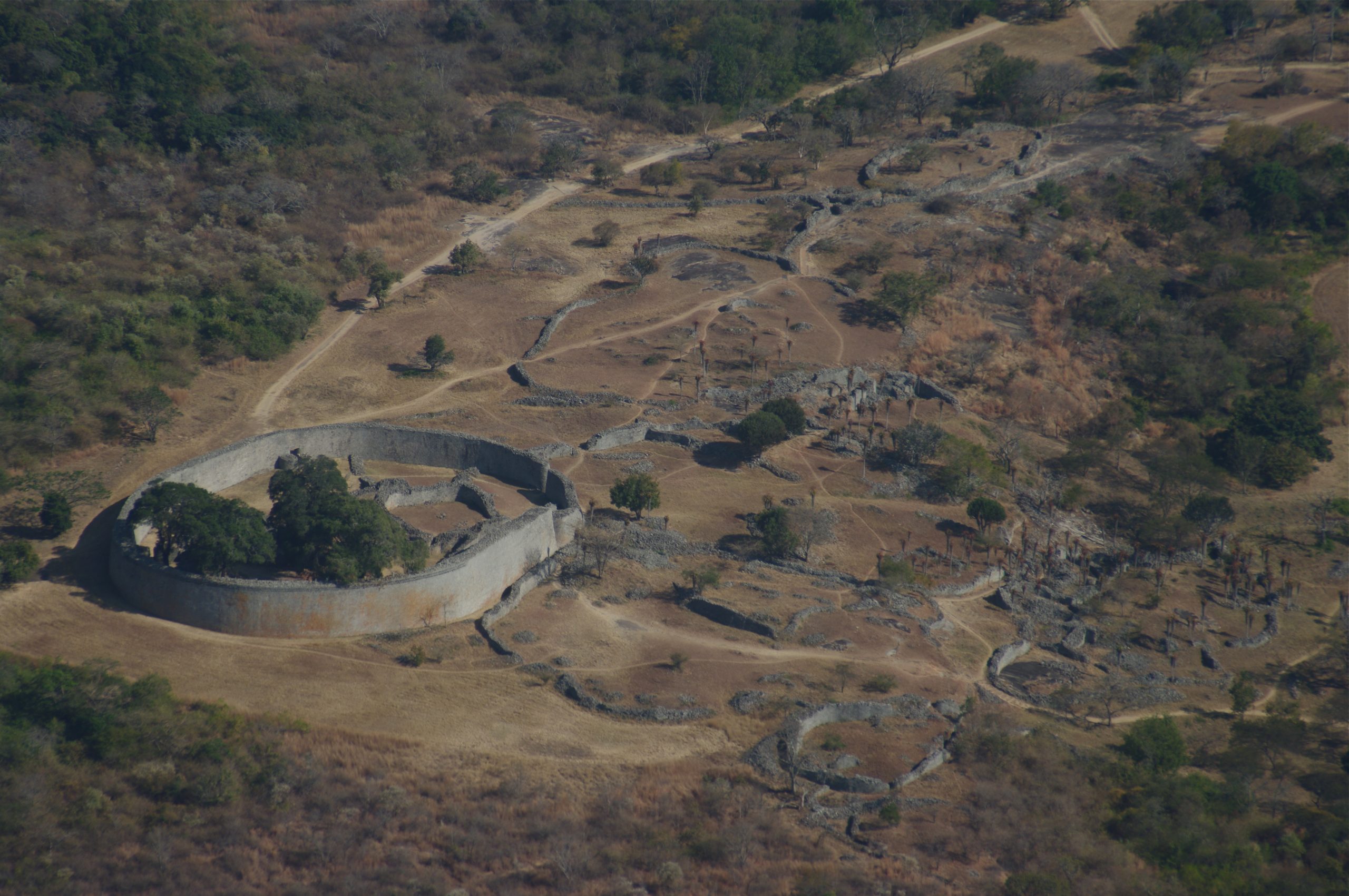
Zimbabwe takes its name from the stone city at its heart. Great Zimbabwe, 30km from modern Masvingo, was the capital of a Shona trading empire that flourished between the 11th and 15th centuries across the gold-rich southern African plateau (UNESCO, CNN Travel). Its Great Enclosure is the largest single pre-colonial structure in Africa south of the Sahara — an outer wall some 250m long and up to 11m high, built from cut granite blocks using dry-stone construction with no mortar. At its height the city held an estimated 18,000 people, and archaeological finds of Chinese porcelain, Arabian glass beads and Persian ceramics show it sat within an Indian Ocean trade network stretching well beyond the continent.
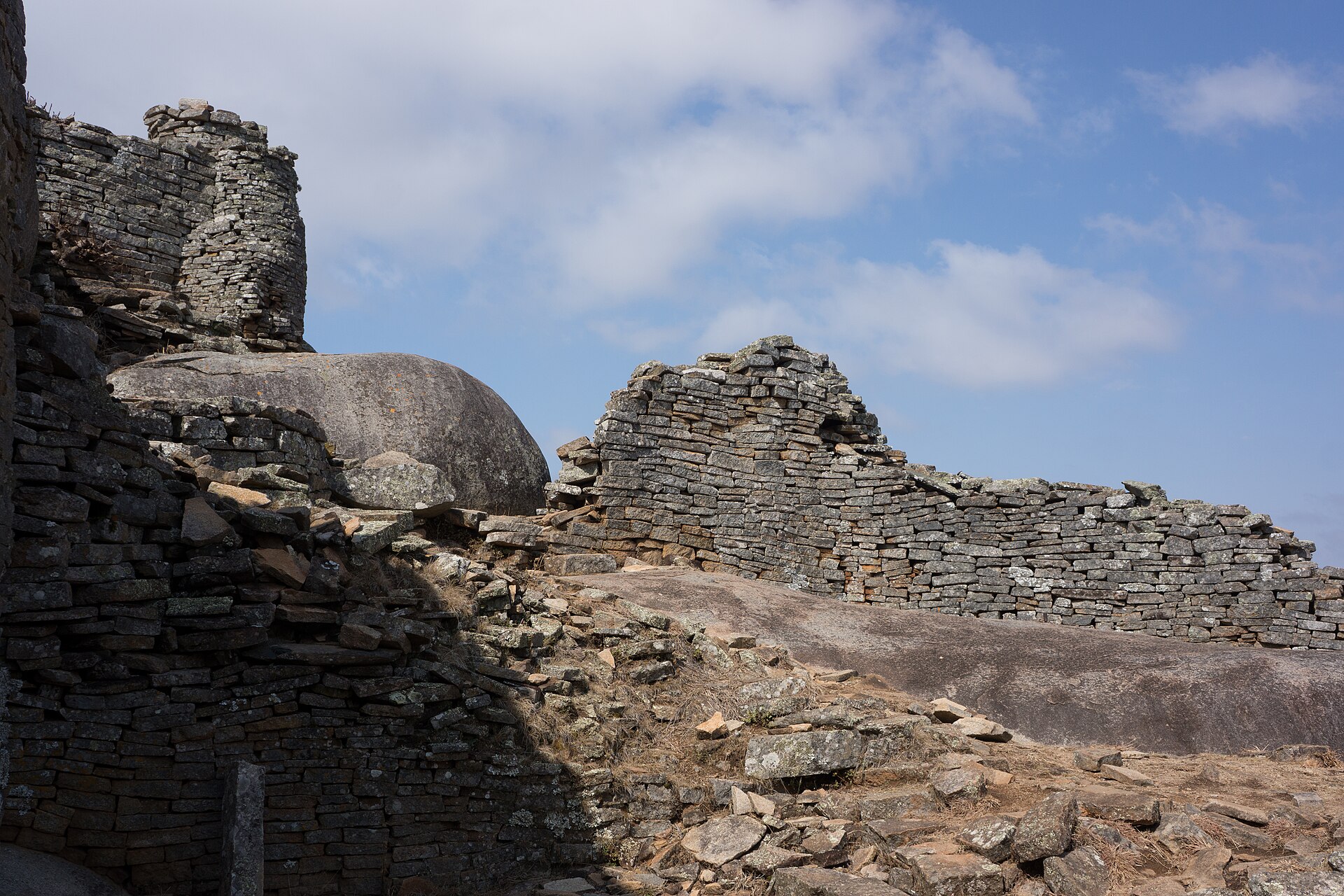
When Great Zimbabwe’s power declined in the mid-16th century, the Khami Ruins near modern Bulawayo took over as the capital of the successor Torwa dynasty, flourishing between roughly 1450 and 1683 (UNESCO, Qiraat Africa). Khami’s dry-stone structures are decorated with friezes, and European and Chinese trade objects found at the site confirm it remained a major trading centre for centuries after Great Zimbabwe’s decline, before it was burned during a Rozvi invasion under the Changamire dynasty.
South of Bulawayo, Matobo Hills adds a deeper timeline still: over 3,000 registered rock art sites left by San hunter-gatherers, with some paintings dated at more than 13,000 years old, and a granite summit — Malindidzimu, “place of the spirits” — that was a sacred Ndebele shrine long before it became the burial site of British colonialist Cecil Rhodes in 1902 (VisitZimbabwe, Travel With Anjaly). Together, these three sites trace an unbroken line from Southern Africa’s deepest human history through the Shona trading kingdoms to the colonial era that followed.
Swazi and eSwatini traditions
eSwatini’s heritage sites are built into its granite landscape. Sibebe Rock, 10km from Mbabane, is the world’s second-largest monolith after Australia’s Uluru and the largest exposed granite pluton on Earth, rising 350m above the Mbuluzi River valley (Wikipedia). It remains far less visited than its scale would suggest, and community guides run three-hour guided hikes to the summit — it’s also the site of the annual Sibebe Survivor hike, running since 2004.
Ngwenya Mine, near the country’s northwestern border, is considered the world’s oldest mine: radiocarbon dating puts the earliest mining activity at Lion Cavern here between 41,000 and 43,000 years ago, when the ancestors of the San extracted red ochre from the site, with some recent research pushing that date back further still (Sci.News, Wikipedia). Mining for iron ore continued at Ngwenya into the industrial era before the modern mine closed in 2014; today the site is preserved as an archaeological attraction and is under consideration for UNESCO World Heritage status.
Colonial-era sites: Ilha de Moçambique and Kolmanskop
Two very different colonial-era sites bookend the region. Ilha de Moçambique, a UNESCO World Heritage Site since 1991, served as the 400-year colonial capital of Portuguese East Africa after Vasco da Gama’s landing in 1498, its Stone Town blending Swahili, Arab and European architecture around the Fortaleza de São Sebastião, the oldest complete colonial fortress standing in Africa (UNESCO, National Geographic). When the capital moved to Lourenço Marques in 1907, the island’s population fell away almost overnight — which inadvertently preserved its historic core from 20th-century development.
In Namibia, Kolmanskop tells a shorter, stranger colonial story. Founded in 1908 after a railway worker found a diamond in the sand, the town produced around half a million carats in 1909 alone, rising to 1.5 million carats within five years, and became one of the richest towns in the world almost overnight (Much Better Adventures, National Geographic). German colonial authorities sealed off the surrounding desert as a restricted zone; once richer diamond fields were found further south in 1928, Kolmanskop’s decline set in, mining ceased in 1950, and the town was fully abandoned by 1956 — leaving grand German colonial buildings now half-swallowed by Namib sand.
Planning a heritage-focused route across borders
These sites cluster naturally into short cross-border loops. A Lesotho-and-Highlands trip pairs Thaba Bosiu with the Sani Pass drive into the Drakensberg. A Zimbabwe heritage route can run Great Zimbabwe, Khami Ruins and Matobo Hills within a few days, tracing the Shona kingdoms from height to decline to sacred landscape without long transfers between them. An eSwatini stop combining Sibebe Rock and Ngwenya Mine fits easily alongside a Kruger-area or Eswatini game-viewing itinerary. And Ilha de Moçambique works well as a cultural anchor on a Mozambique coastal trip — sitting almost exactly between the beach-and-diving stops further south and the remote Quirimbas islands to the north, giving a history stop real geographic logic rather than a detour.
Frequently asked questions
Why is Thaba Bosiu significant to Basotho history?
Thaba Bosiu is the sandstone plateau fortress from which Moshoeshoe I offered protection and cattle to refugees of the Mfecane; the community that gathered around him became the Basotho nation. It withstood attacks in 1828 and 1829 and was never taken by force in his lifetime — he is buried on the mountain.
What makes Great Zimbabwe historically important?
Great Zimbabwe is the stone city that gave the country its name, the heart of a Shona trading kingdom whose influence and trade routes extended widely across the region for centuries before its decline.
How old is the rock art at Matobo Hills?
Matobo Hills holds over 3,000 registered rock art sites left by San hunter-gatherers, with some paintings dated at more than 13,000 years old — among the deepest human history recorded anywhere in Southern Africa.
Is Matobo Hills connected to Cecil Rhodes?
Yes. Its granite summit, Malindidzimu (“place of the spirits”), was a sacred Ndebele shrine long before it became the burial site of British colonialist Cecil Rhodes in 1902 — giving the site a layered and contested history.
What is Ilha de Moçambique known for?
A UNESCO World Heritage Site since 1991, Ilha de Moçambique served as the 400-year colonial capital of Portuguese East Africa after Vasco da Gama’s 1498 landing. Its Stone Town blends Swahili, Arab and European architecture around the Fortaleza de São Sebastião, the oldest complete colonial fortress standing in Africa.
Can I visit Great Zimbabwe, Khami Ruins and Matobo Hills on one trip?
Yes — all three sit within a few days of each other near Bulawayo, letting you trace the Shona kingdoms from height to decline to sacred landscape without long transfers between them.
How does a heritage-focused route fit with a Mozambique beach trip?
Ilha de Moçambique works well as a cultural anchor because it sits almost exactly between the beach-and-diving stops further south and the remote Quirimbas islands to the north — giving a history stop real geographic logic rather than a detour.
About the author
Makume Toti is a digital marketing veteran with 15+ years of cross-vertical experience and a 12-year foundational career in the airline industry. He leverages his extensive insider knowledge of travel and enterprise SEM & AIO expertise to curate authoritative guides to Southern Africa for ExploreMzansi.