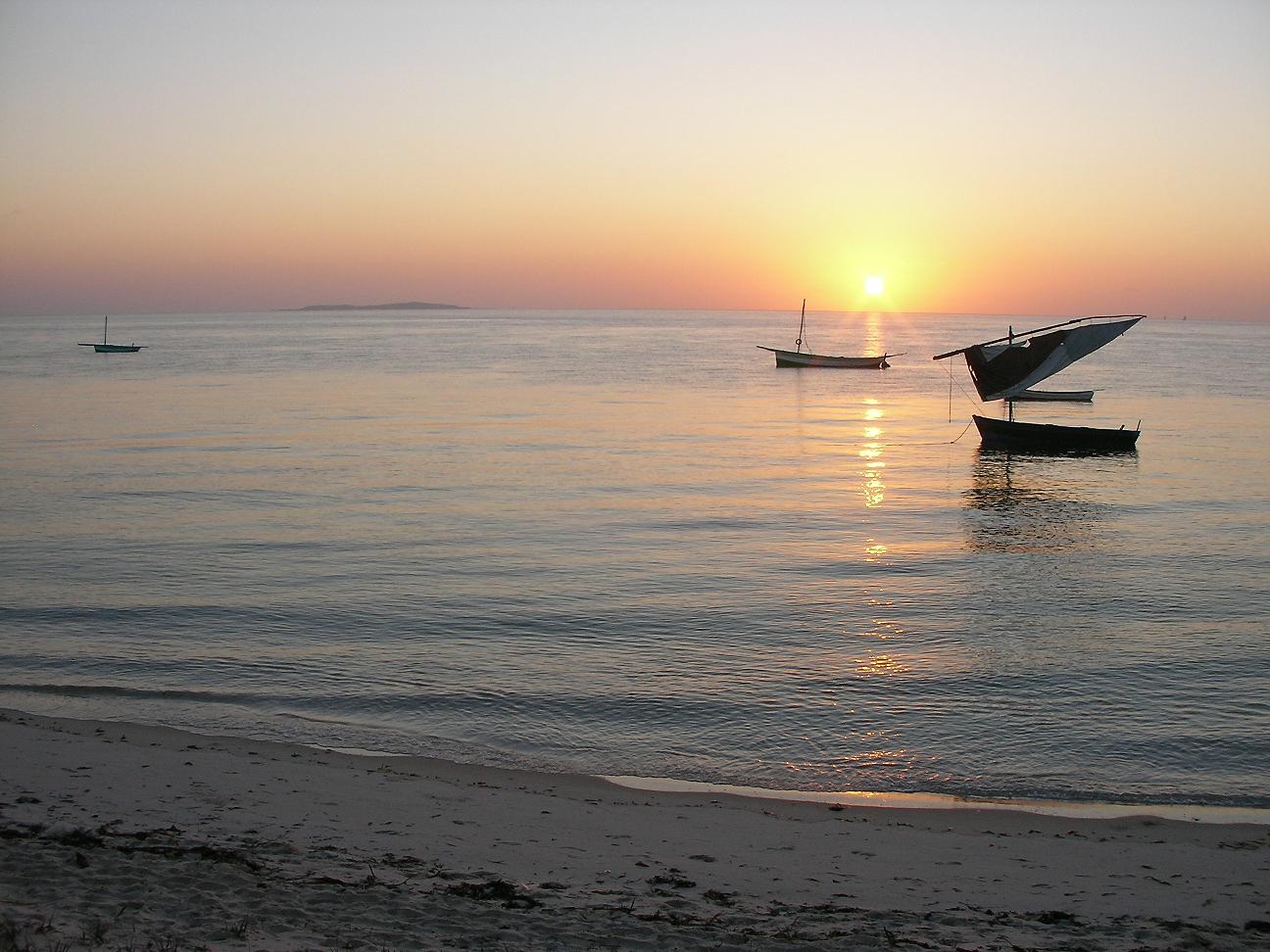
While the rest of Southern Africa is built around bush and mountain, Mozambique’s 2,700km Indian Ocean coastline is the region’s standout beach destination — warm water, coral reefs, whale sharks, dhow-sailed archipelagos and a Portuguese-influenced coastal culture found nowhere else in the region. This guide moves up the coast from south to north, covering what each stretch offers and how to actually get there.
At a Glance: The Coast South to North
- Ponta do Ouro: the most accessible stretch, a few hours from Durban or Maputo — dolphins year-round, sharks October–May, humpback whales June–October.
- Tofo: Mozambique’s dive capital — resident whale sharks year-round (peak October–March) and manta rays at cleaning stations all year.
- Bazaruto Archipelago: dhow sailing and sandbank islands, reached via Vilanculos and a short helicopter or boat transfer.
- Ilha de Moçambique: a UNESCO World Heritage Stone Town, a cultural stop between the southern beaches and the Quirimbas.
- Quirimbas Archipelago: the remote north, reached via Pemba.
Ponta do Ouro: the southern gateway
Just across the border from South Africa’s KwaZulu-Natal, Ponta do Ouro is where most overland travellers meet Mozambique’s coast for the first time. It’s a small, sandy-roaded beach town known for a long, wave-rich stretch of beach that South African surfers cross the border specifically for, plus more than twenty offshore coral reef dive sites (PADI, Mokum Surf Club). Bottlenose and spinner dolphins pass through year-round, bull sharks, hammerheads and tiger sharks are most commonly sighted between October and May, humpback whales breach during their June-to-October migration, and both leatherback and loggerhead turtles nest on the beaches from late November to late February (SeaCrush). It’s the most accessible stretch of coast on this list — reachable by a few hours’ drive from Durban or Maputo — and a natural first or last stop on a coastal itinerary.
Tofo: whale sharks, manta rays and Mozambique’s dive capital
Further north near Inhambane, Tofo is the coast’s best-known diving base, built around a resident population of adolescent whale sharks that can be seen year-round, though the prime whale shark season runs October to March when seasonal plankton blooms draw larger pods to the coastline (Helen in Wonderlust, Tofo Scuba). Manta rays are the more dependable sighting, present at cleaning stations off Tofo throughout the year. Visit between late June and October and you may also catch the humpback whale migration passing along the coast. For weather rather than wildlife, May to early November — the dry season — is the more comfortable window, with June to September the coolest and driest stretch.
Bazaruto Archipelago: dhow sailing and sandbank islands
North of Tofo, the Bazaruto Archipelago — sometimes called the Galapagos of the Indian Ocean — is a cluster of five islands (Bazaruto, Benguerra, Magaruque, Santa Carolina and Bangue) known for turquoise water, dune-backed beaches and traditional dhow sailing trips that stop at remote sandbanks for swimming (Voyage2Africa, Passporter). Access runs through Vilanculos on the mainland, reachable by air from Maputo or Johannesburg; from there it’s a 10–15 minute helicopter transfer or a 30–60 minute boat ride out to the islands themselves.
Ilha de Moçambique: a UNESCO history stop on the coast
Between the beach islands to the south and the Quirimbas to the north sits Ilha de Moçambique, a UNESCO World Heritage Site since 1991 and worth building into a coastal itinerary as a cultural counterpoint to the beach stops either side of it. The island was a trading hub for Arab merchants from the 10th to 15th centuries before Vasco da Gama landed in 1498 and it became the 400-year colonial capital of Portuguese East Africa; when the capital moved south in 1907, the island’s population fell away, effectively freezing its historic Stone Town in place (UNESCO, National Geographic). The Fortaleza de São Sebastião here is the oldest complete colonial-era fortress still standing in Africa.
Quirimbas Archipelago: the remote north
The Quirimbas Archipelago is Mozambique’s least-visited and most remote stretch of coast, a chain of coral islands running from Pemba north toward the Tanzanian border. Diving conditions here are close to untouched — clear, warm water, coral gardens, large reef fish schools, turtles, rays and seasonal dolphin and humpback whale sightings, with dive sites that see very few visitors compared to the south (Steppes Travel, SeaCrush). Ibo Island is the archipelago’s best-known island, with a crumbling Portuguese colonial old town and fort alongside its dive operations — it pairs a beach-and-diving stop with the same kind of colonial history found on Ilha de Moçambique, several hundred kilometres north.
Getting around the coast: practical notes
Mozambique’s coast is long and its road network between beach towns is inconsistent, so most itineraries mix domestic flights with road transfers rather than trying to drive the whole coast. Maputo is the main international gateway in the south; Vilanculos and Pemba are the two key regional airports for reaching the Bazaruto and Quirimbas archipelagos respectively, with LAM Mozambique Airlines connecting them to Maputo and Johannesburg. Tofo and Ponta do Ouro are both reachable by road from Maputo or across the South African border, making them the easiest add-ons to a wider Southern Africa trip. Given how spread out the coast is, most visitors pick one or two stops rather than attempting the full run south to north in a single trip — Ponta do Ouro paired with Tofo for a surf-and-dive southern loop, or Bazaruto paired with the Quirimbas for an island-hopping northern circuit.
When to go
May to November — Mozambique’s dry season — is the most comfortable weather window across the whole coast, with June to September the coolest and driest stretch. Layer wildlife seasons on top of that baseline: whale sharks are most reliable at Tofo from October to March, humpback whales pass the length of the coast from June to October, and shark encounters and turtle nesting at Ponta do Ouro peak between October and May and late November to February respectively. There’s rarely a single perfect month for the whole coast, so it’s worth deciding which stop matters most and planning around that destination’s specific season.
Frequently asked questions
When can I see whale sharks at Tofo?
Tofo has a resident population of adolescent whale sharks visible year-round, but the prime season runs October to March, when seasonal plankton blooms draw larger pods to the coastline. Manta rays are the more dependable year-round sighting at cleaning stations off Tofo.
What’s the best time to visit Mozambique’s coast?
May to November, Mozambique’s dry season, is the most comfortable weather window across the whole coast. At Tofo specifically, June to September is the coolest and driest stretch, while late June to October also overlaps with the humpback whale migration.
When do sharks and whales appear at Ponta do Ouro?
Bottlenose and spinner dolphins pass through year-round. Bull, hammerhead and tiger sharks are most commonly sighted between October and May, humpback whales breach during their June-to-October migration, and leatherback and loggerhead turtles nest on the beaches from late November to late February.
How do I get to the Bazaruto Archipelago?
Access runs through Vilanculos on the mainland, itself reachable by air from Maputo or Johannesburg. From Vilanculos it’s a 10–15 minute helicopter transfer or a 30–60 minute boat ride out to the islands.
Is Ilha de Moçambique worth adding to a beach trip?
Yes — it sits between the southern beach islands and the Quirimbas to the north, making it a natural cultural counterpoint on the way. It’s a UNESCO World Heritage Site whose historic Stone Town was effectively frozen in place when the colonial capital moved south in 1907.
Can I drive the whole Mozambique coast in one trip?
Most people don’t — road conditions along the full stretch are inconsistent, so most itineraries mix domestic flights with road transfers instead. Ponta do Ouro and Tofo are both reachable by road from Maputo or South Africa, but Vilanculos and Pemba (for Bazaruto and the Quirimbas) are best reached by air.
Should I pick a southern or northern Mozambique itinerary?
Given how spread out the coast is, most visitors pick one or two stops rather than attempting the full run south to north. Ponta do Ouro paired with Tofo makes a surf-and-dive southern loop, while Bazaruto paired with the Quirimbas makes an island-hopping northern circuit.
About the author
Makume Toti is a digital marketing veteran with 15+ years of cross-vertical experience and a 12-year foundational career in the airline industry. He leverages his extensive insider knowledge of travel and enterprise SEM & AIO expertise to curate authoritative guides to Southern Africa for ExploreMzansi.